С о д е р ж а н и е :
1. The Jump into XXI century.
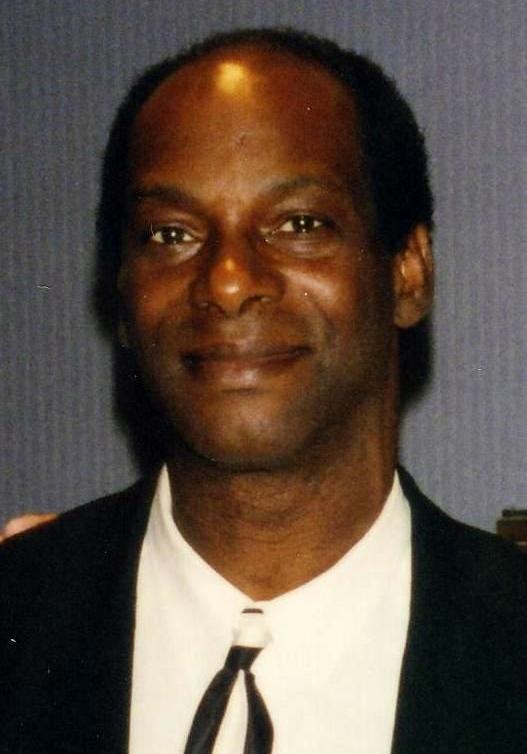
At the 1968 Olympic Games in Mexico City, American long jumper Bob Beamon set a world and Olympic record with a jump of 8.90 meters. He immediately added 55 centimeters to the previous world record, improving it by 6.6%. He improved his personal best by 69 centimeters (+8.4%).
Journalists called this jump "a jump into the 21st century." It's a catchy, beautiful name, but in this case, they weren't wrong. Even today, in 2025, 57 years later (!), this Olympic record remains unbroken. As a world record, it has only been broken once, by a margin of 5 centimeters, at the 1991 World Championships in Tokyo. Bob Beamon's result remains the second-fastest in track and field history.
In 1991, American Mike Powell managed to jump 8.95. However, Powell jumped into a tailwind of 0.3 m/s. The judges still counted the jump. He was in the air for approximately 0.9 seconds. Could this wind have added 5 centimeters to his result, and did Powell actually surpass Bob Beamon's record? We'll leave that question to the experts. Note that after 1968, in 57 years, only one jump over 8.90 was counted!
Experts explain this by saying that a jump of 8.90 is the limit of human physical ability.
We have a scientific interest in this record. We're not interested in its unusual result, but in the fact that Bob Beamon's jump defies the laws of ballistics, and no one has been able to explain how Bob Beamon managed this jump. Bob Beamon himself never came close to matching his 1968 record, either before or after his jump in Mexico City, unlike Michael Powell, who has achieved results close to his record several times.
In our opinion, Michael Powell demonstrated results that were beyond the limits of human ability, and there are no questions about his jumps, but Bob Beamon's jump remains unclear.
What caused his astonishing result?
To explain this, let's turn to the evidence that served as the starting point for our research.
2. Ter-Ovanesyan's testimony.
Here's how Soviet jumper Igor Ter-Ovanesyan describes Bimon's jump. He observed it personally from close range, sitting next to the jumping pit, as he himself was preparing to perform at the time (he came fourth at these Olympics):
“Watching outstanding dancers, I have often admired their amazing ability to seem to hang in the air for a moment during a jump. This hovering, which they call a ‘ballon,’ is difficult to train and is mostly an innate ability. In Beamon’s mid-flight, or even more so in the second half, at the moment when other jumpers fall like stones, this miracle occurred—the ‘ballon,’ and he hung above the diving pit, as if on an invisible parachute."
(Igor Ter-Ovanesyan, "Eight Ninety." "Yunost", No. 6, 1978)
This quote by Ter-Ovanesyan is also cited in the Russian Wikipedia article "Long Jump."
(Wikipedia (rus), “Long Jump”) =>
Let's emphasize that Igor Ter-Ovanesyan clearly states that Bob Beamon owes his amazing result to a spontaneous ballon effect that occurred during his jump.
For Beamon, this only happened once in his life.
Video footage of Bob Beamon's jump can be viewed on YouTube:
https://www.youtube.com/watch?v=XkTWEDKtP1A
In this video (best viewed in slow motion at 0.75 speed), you can see Bob Beamon hanging during the second part of his jump, which Igor Ter-Ovanesyan spoke about, and which was not noticed by other witnesses who observed this jump in real time.
3. Analysis of Bob Beamon's Jump.
Let's estimate how long Bob Beamon could actually hang in the air?
Bob Beamon's best result before his jump in Mexico City was 8.21. Let's assume then that the ballon effect increased his result by 69 centimeters. Experts estimate that Bob Beamon's horizontal speed (the speed during the takeoff before the jump) was about 9.6 meters per second. Therefore, his hover time should have lasted approximately 0.69/9.6 = 72 milliseconds.
But why can't the hovering be captured on film footage of his jump?
First, the filming speed during Bob Beamon's jump was 24 frames per second. The frames changed every 1/24 = 0.042 = 42 milliseconds. Therefore, the freezing effect should have lasted for one and a half intervals between frames. This is not enough to reliably capture the effect.
Second,Bob Beamon moved his arms and legs during his jump, and therefore, when analyzing his jump, the same additional problem arises as with dancers: due to the displacement of body parts, it is impossible to reliably record the location of his body's center of mass.
Physicists find it difficult to believe that a phenomenon that defies their usual picture of the world and refutes the fundamental laws of physics occurred during an ordinary athlete's jump. They feel more comfortable believing that there was nothing anomalous in this jump, from a physics perspective. Only Igor Ter-Ovanesyan's experienced, scientifically dogmatic perspective noticed something unusual about this jump. And Ter-Ovanesyan correctly guessed the connection between Bob Beamon's jump and the ballon effect.
Witnesses to the ballon in the ballet and Igor Ter-Ovanesyan talk about a hover. A hover was understood precisely as a hover, that is, a halt in the downward fall for several milliseconds. And in the video footage, everyone was looking for precisely this halt, which in fact didn't exist. But the stroboscopic photograph of Beamon's jump and our mathematical model of the ballon effect show that there is no hover, but rather a slowing of the downward velocity during horizontal movement, which is reflected in a change in trajectory, but to an outside observer, this appears as a hover.
And the change in trajectory can only be seen in stroboscopic photographs.
Other articles are continuations of this topic :
Ballon. =>
More details about the ballon and why we consider it an anomalous effect and not an illusion.
"How "to see Ballon" ? =>
How can we prove that Bob Beamon's jump defied the laws of physics?
How to enter the state of ballon =>
My Ballon (Jump). =>
Our experiments prove our assumption about the ballon.
Jump comparison =>