I n d e x :
1. What is the ballon ?
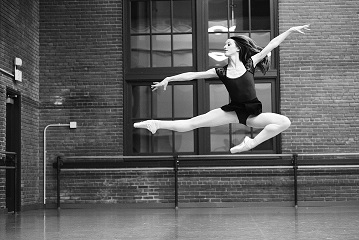 In ballet, the "ballon" is a dancer's ability to hover in the air for a few moments during a jump.
Sometimes, the "ballon" is simply understood to mean a high and beautiful jump. But we will always understand the "ballon" to mean a jump with a hover in the air.
Dancers who demonstrate the "ballon" can do it always during their performances. For dancers, the "ballon" is not a spontaneous, random effect, but a constant ability.
Only a few dancers in the world can demonstrate this effect. Dancers say that the "ballon" is a very rare ability, that it cannot be learned, and that this ability (this gift) is given to the dancer from birth. Dancers who can perform a good balon are legendary, and they remain in the history of ballet.
The term "balon" comes from French ballet. It is believed to derive from the surname of the French dancer Claude Ballon (1671-1744), who was principal dancer at the French Royal Academy of Music from 1691-1710 and was known for his very soft and beautiful leaps. Whether he himself demonstrated the balon is unknown.
Vaslav Nijinsky demonstrated outstanding balon. Alexei Ermolaev, Nikolai Zubkovsky, Yuri Solovyov, Mikhail Baryshnikov, and Maya Plisetskaya have all demonstrated good balon. Today, Natalia Osipova and Ivan Vasiliev demonstrate the balon.
Only two people in the entire world!
2. Ballon and academic science.
Academic science denies the possibility of actual hovering in midair and sees nothing mysterious in this effect. Scientists regard the ballon as an illusion:
“A dancer will appear to defy the laws of physics when ballon is exhibited effectively. For example, during a grand jeté, the dancer may appear to hover in the air. Physically, the dancer's center of mass follows a ballistic trajectory, as does any projectile, but observers have limited ability to reckon center of mass when a projectile changes its configuration in flight. By raising the arms and legs while ascending and lowering them while descending, the dancer alters the apparent path of the center of mass and, in so doing, seems to observers to be momentarily floating in the air.”
Wikipedia : Ballon (ballet) =>
3. Why do we think that the ballon is not an illusion ?
We disagree with those who believe the ballon is an illusion. There are three reasons for this :
Conclusions:Based on this, we are convinced that the ballon is a real, anomalous effect demonstrating a violation of the law of gravity.
But why can't this be proven so that scientists agree?
At first glance, it seems very simple: film a dancer jumping and watch the jump frame by frame. But there's a problem. The ballon lasts only a few moments. Less than 1/10th of a second. The observer's eye notices this effect, notices something unusual in this jump. But this effect is not captured in the film frames. It is too short to be filmed. Moreover, during the jump, parts of the dancer's body move, and it is impossible to accurately determine in the frames (as scientists correctly note) the location of the person's center of mass. For this reason, scientists don't believe in the ballon and consider it an illusion.
Another reason scientists don't see an anomalous effect in the ballon is that they're looking for hovering. Meanwhile, the ballon's anomalous nature, as seen in Bob Beamon's jump, and as Igor Ter-Ovanesyan correctly noted, manifests itself in the anomalously asymmetric trajectory of the jump. To see this, a stroboscopic photograph of the jump is needed. And for this, the jump must be performed:
- Firstly, with high horizontal speed.
- Secondly, in one plane, so that a good stroboscopic photograph can be taken.
In ballet, this is impossible due to the nature of the dance and the low horizontal speed of the jump. And if it weren't for Beamon's jump (the only jump in the history of the sport where the ballon effect was evident), we would have no proof that the ballon effect is real.
How are the ballon effect and Bob Beamon's jump related?
Thanks to the ballon effect, Bob Beamon achieved his remarkable jump. On the other hand, without Bob Beamon's jump, it would be impossible to prove the anomalous nature of the ballon effect in ballet.
Today, a strobe photograph of Bob Beamon's jump is the only proof that the ballon effect is real. In ballet, the jump is subordinated to the dance, and the dancer performs many dance movements. Because of this, it's impossible to accurately determine the dancer's center of mass, allowing scientists to deny any anomalous effect. During Bob Beamon's jump, the ballon manifested itself in its pure form, allowing the stroboscopic photograph to reveal the anomalous trajectory of his jump. In a stroboscopic photograph of a dancer during his dance, due to the additional dance movements, we won't be able to see anything anomalous.
So, we must find a solution: how can we prove the ballon's reality?
Furthermore, we must find answers to the following questions:
- Why can't the ballon time be increased ?
- If this is a real, unusual, anomalous effect, then it should be possible to develop it. But the ballon only lasts a fraction of a second? Why not longer?
- What does the ballon time depend on ? Why can't the ballon time be increased ?
- Почему баллону нельзя научиться ?
- The ability to demonstrate a ballon is more common in men than in women. Why ? Women jump just as well as men, and they have better flexibility.
4. Ballon and Sport.
If we can control the ballon effect and trigger it at will, it will revolutionize sports. Not just in long jumps, but in any sport where the athlete is lifted off the ground. This could include long jumps, running of all distances, gymnastics, figure skating, and even team sports. In all these cases, the ballon will increase stride length, conserve energy, increase speed, and assist in gymnastic maneuvers. But how to do this?
Somehow, this could be done, since dancers who possess this ability demonstrate the ballon in every performance, and not by chance. But the dancers themselves can't explain it: "That's just how it works, we don't know how, and we can't teach it to anyone."
5. Ballon and Levitation.
It's possible that the ballon is related to another mysterious effect that science denies—levitation. But there are differences between the two:
1. Levitation occurs in an altered state of consciousness, a trance. When performing the ballon, the dancer is in complete control of their state.
2. Levitation usually occurs spontaneously. A dancer performing the ballon does so consciously in every performance.
3. The ability to levitate cannot be transferred to another person. The ballon ability can be transferred to another, untrained person through Projection Powders. The discovery of the ability to transfer the ballon ability to another person is the main achievement of our work.
4. The ballon is absent if the jump is only upward. A ballon, however, requires a horizontal component of velocity. Levitation, on the other hand, is a vertical rise without horizontal movement. This strange feature, previously unnoticed, corresponds to our mathematical model of the ballon effect.
Ballon is more common than levitation. This effect is repeatable and occurs consciously. This makes it possible to study it. Meanwhile, levitation, due to its rarity, is practically inaccessible to study. We hope that studying the ballon will help in the study of such a rare and mysterious phenomenon as levitation.
The ballon cannot be considered partial levitation. The ballon and levitation, in our opinion, are two different effects. This is evident from the following:
1. The ballon cannot be improved beyond a certain limit. You cannot increase the length of your jump beyond a certain limit. However, the levitation time can be increased to a fairly significant extent.
2. The ballon only manifests itself in the presence of a transverse component of velocity to the gravitational field. Levitation is possible even in the absence of a transverse velocity component.
3. Levitation occurs in an altered state of consciousness. Ballon is possible in a normal state of consciousness.
4. Ballon and levitation have different theoretical explanations. We have a phenomenological theory of antigravity. It explains the main features of the ballon effect. (Phenomenological Theory=>). But this theory cannot explain the phenomenon of levitation. The theory of levitation has yet to be created.
6. Explanation of the Ballon.
In an attempt to answer these questions, we proposed a phenomenological theory of antigravity(Смотри "Phenomenological Theory" =>). It follows from this model that :
- The ballon phenomenon only occurs if there's a horizontal component to the jump. If we simply jump upward, the ballon effect cannot occur.
- The ballon time depends on the horizontal speed of movement.
This made it possible to record the ballon effect and explain the features of the ballon effect in ballet.
- During a jump, the jump time and horizontal jump length must be greater than permitted by the laws of ballistics. Yes, we can't capture the ballon during video filming, but we can measure the jump length when we're long jumping and the jump height when we're only high jumping. We can then compare these results and see whether these jumps violate the laws of ballistics. We can also look for any anomalies in the athlete's trajectory when they're long jumping. (See How "to see" Ballon ? =>).
- Secondly, it followed that the ballon's duration could not exceed a certain value, since horizontal velocity during a jump is limited by human physical capabilities. This made it possible to make a rough estimate of the coefficient (the ballon constant) that appears in the equations describing antigravity effects.
7. Why is the Ballon important to us ?
- We were looking for anomalous properties in projection powders. We made dozens of hypotheses about what these properties might be. We spent several years testing these hypotheses and found nothing. Then we read that if the Philosopher's Stone is pressed against the body, it grants a person the ability to levitate. We thought, "Okay, we don't have the Philosopher's Stone, but maybe our projection powders will give us at least partial levitation?" We taped a packet of projection powder to our bodies and started experimenting with it on a scale. And nothing worked! It was terrible! We spent years searching, wasted our entire supply of red projection powder, and all for nothing! Our mistake was that we thought levitation should come gradually and manifest itself in a gradual decrease in the body's gravitational mass.
But one day we read Igor Ter-Ovanesyan's memoirs about the 1968 Mexico City Olympics and Bob Beamon's jump (see "Bob Beamon's Jump" =>). We became interested in the ballon and read that everyone was talking about hovering during a jump. But hovering can only occur with a horizontal component. If the ballon is a slight decrease in gravitational mass, then an outside observer wouldn't see any hovering. And then we realized that partial levitation can only occur with horizontal movement, and the ballon is a manifestation of partial levitation during horizontal movement in a gravitational field. The vertical component of velocity has no effect. From there, everything was simple. We just needed to figure out how to detect the ballon. But if the ballon only manifests itself with a horizontal component, then there should be a difference between jumping vertically and jumping long, and there should be an anomaly in the athlete's jump trajectory. (How to "see" the Ballon ? =>).
But do projection powders affect the ability to use the ballon? We glued a packet of red projection powders to our bodies, as the alchemists recommended, and began jumping. And the length of our long jump began to increase (My Ballon =>).
The ballon effect was the first anomalous effect of projection powders that we discovered. We "caught" the anomalous effect, then proposed a theory for it, and then began to develop it and move forward. - The ballon constant allows us to make the numerical estimates necessary for creating aircraft with antigravity shields.