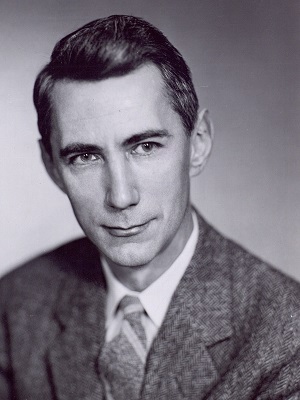
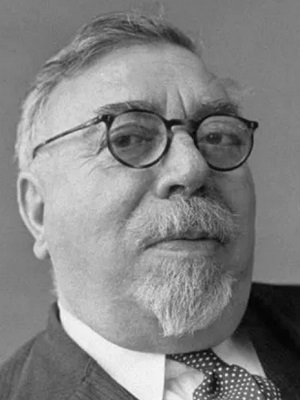
The idea of an informational approach to understanding the Universe was proposed by the American mathematician and founder of cybernetics, Norbert Wiener. In one of his lectures in the late 1940s, he said: :
"Scientists first imagined the world as a gigantic clockwork mechanism, then as a gigantic energy-processing machine. Today, we've come to understand that the world is an information system that processes information."
This idea was further developed after the publication of two papers by the American mathematician Claude Shannon in 1948 on the theory of information transmission. Clear analogies were observed between a number of Shannon's results and those of statistical physics and quantum mechanics. At first, this approach was enthusiastically received by physicists: scientists saw in it a way to resolve philosophical and theoretical problems in quantum mechanics and biology. A great future was predicted for the information approach. However, disappointment soon set in among scientists: the information approach failed to yield a single fundamentally new result. In some cases, it allowed for a new look at existing results, but nothing more. And so the information approach gradually began to be forgotten. Meanwhile, a fundamentally important question remained unexplained :
Why has such a new, philosophically deeper and more general approach failed to produce any results?
This question is especially pressing today, as informational thinking becomes a part of everyone's lives.
That is, the information concept is based on the assumption that there are objects that exchange information with each other, and that's it. Based on this assumption alone, we must answer the following questions:
Why is this information represented to us as four-dimensional space and time with a pseudo-Euclidean metric?
What is a field?
What are particles of matter?
In 1990, John Wheeler proposed that information is a fundamental concept of physics. According to his "it from bit" doctrine, all physical entities are fundamentally information-theoretic.
If everything originates from a bit, then the Universe is described by algebraic relations. And the Universe represents a finite group, albeit with a very large number of elements.
As was understood even in Ancient Greece, infinite division leads to logical contradictions, which can only be resolved by assuming discreteness of space and time. Discreteness issues are discussed in H. Harmuth's book "Information Theory Applied to Space-Time Physics."